Source 20 tpd maize posho mill for Flour Rice Beans
Compare 25 listings for the 20 tpd maize posho mill suitable for processing flour, rice flour, and beans. Buyers can review specifications including capacity, voltage, and customization options to find the right equipment for their production needs.
Key considerations
Products List


High Efficiency 10 Tpd Maize Milling Processing Machine Corn Mill Posho Mill
$15999.00 - $19999.00
Moq: 1


New Design Maize Flour Mill Corn Mill 30-50 Tpd Posho Mill Equipment Price
$39999.00 - $44999.00
Moq: 1


High Performance Maize Mill Posho Corn Milling Processing 30-50 Tpd Grinder
$41000.00 - $45000.00
Moq: 1


Global Maize Corn Posho Mill Flour Milling 30-50 Tpd Grinding Mill Machine
$39999.00 - $49999.00
Moq: 1


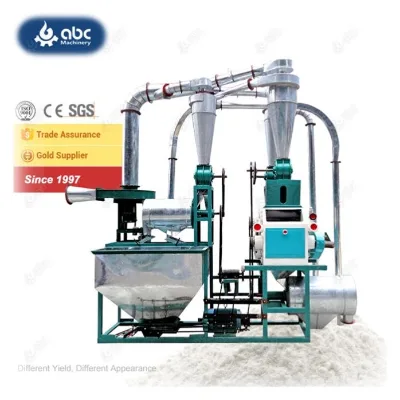
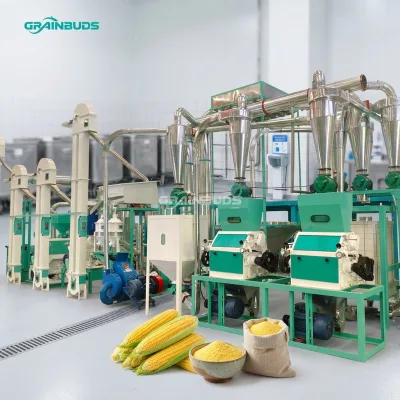
Comprehensive Sourcing Guide
20 Tpd Maize Posho Mill Sourcing Guide
The 20 tpd maize posho mill represents a critical piece of industrial equipment designed for the efficient processing of maize into fine flour, commonly known as posho or ugali, suitable for both commercial bakeries and large-scale food production facilities. Based on observed market data, these units are available in configurations ranging from 10 to 50 tons per day, with specific models like the SSM-20TPD tailored for the 20-ton daily capacity requirement. Buyers must recognize that while the core function remains consistent, the operational mode can vary significantly between automatic and manual systems, necessitating a clear definition of labor requirements before finalizing a purchase.
Procurement decisions for this machinery hinge on the specific application needs, as the observed product attributes indicate versatility in processing not just maize, but also rice flour, beans, wheat, and starch. The equipment is typically supplied in a new condition with a vertical or horizontal appearance, packaged in wooden crates or simple packaging to ensure safe transit from the origin in China. Understanding that customization is available allows buyers to align the machine's output mesh size, such as the observed 40-60 mesh for maize flour, with their specific end-product quality standards.
Product Scope and Observed Listing Signals
When evaluating the product scope, buyers should note that the observed listings cover a wide spectrum of capacities, from 5 to 500 tons per day, with the 20 tpd unit sitting within a mid-range tier that balances throughput with footprint. The application data confirms that these mills are multifunctional, capable of handling diverse grains including corn, which is explicitly listed as a press material, alongside other staples like rice and beans. This versatility suggests that the machinery is not limited to a single crop, offering operational flexibility for facilities that may need to switch production lines based on seasonal availability or market demand.
The physical characteristics of the machines vary, with some units described as vertical and others as horizontal, a distinction that impacts floor space planning and integration into existing production lines. The observed price range of 1,850 to 99,000 USD reflects the significant variance in specifications, automation levels, and capacity tiers available in the market. Buyers must carefully distinguish between the 20-ton daily capacity models and those offering 30-50 tons per day or 20 tons per 24 hours, as the terminology can sometimes be ambiguous in listings, requiring direct verification of the daily throughput rate against the specific model number.
Technical Specifications to Verify
Technical verification begins with the power source and voltage requirements, as the observed data indicates a standard 380V electric supply, though customized voltage options are also available to match local grid infrastructure. The core components, including bearings, engines, and pressure systems, are critical to the machine's longevity and performance, and buyers should request detailed lists of these parts to ensure they meet industrial durability standards. Additionally, the noise level is a key operational metric, with observed specifications stating a limit of less than 85 dB, which is essential for maintaining a safe working environment and complying with occupational health regulations in the facility.
Capacity and extraction efficiency are the next critical technical parameters to validate, as the observed data cites extraction rates between 75% and 80% for certain models, while others specify capacities ranging from 30 to 50 tons per 24 hours. Buyers must confirm whether the 20 tpd model achieves its throughput through a continuous process or batch operation, and verify the pipe material, which is noted as stainless steel in several listings to ensure food safety and corrosion resistance. The standard dimensions for some units are listed as 14007501750mm, but since standards can depend on capacity, the exact physical footprint must be confirmed for the specific 20-ton model to ensure it fits the intended installation space.
Compliance and Safety Documentation
Compliance documentation is a primary concern for international buyers, with ISOCE certification observed in the market data, though the specific scope of this certification should be verified against local regulatory requirements. The presence of a "CE" mark is mentioned in background knowledge, but buyers should not assume this status without explicit confirmation from the supplier, as certification status can vary by model and production batch. It is imperative to request the official test reports and inspection videos provided by the manufacturer, as these documents serve as the primary evidence of the machine's safety features and operational reliability before shipment.
Safety features extend beyond certification to include the operational controls and emergency protocols integrated into the automatic grade machinery. The observed data highlights that engineers are available for overseas service, which is a crucial component of the safety and maintenance ecosystem, ensuring that any operational issues can be resolved promptly without prolonged downtime. Buyers should also verify the warranty terms, which are observed to be two years, and ensure that the warranty explicitly covers the core components and the after-sales service provided, including the availability of technical support for troubleshooting and repair.
Cost Drivers and Commercial Terms
The cost of a 20 tpd maize posho mill is driven by several factors, including the level of automation, the quality of core components, and the specific customization required for the buyer's application. The observed price range is broad, suggesting that the base model may be significantly cheaper than a fully customized unit with advanced features like specific mesh sizes or enhanced extraction rates. Buyers should analyze the total cost of ownership, considering that the "Automatic" grade machines may have higher upfront costs but offer long-term savings through reduced labor requirements and consistent output quality.
Commercial terms such as the minimum order quantity (MOQ) and packaging standards are also critical to the final cost structure, with observed data indicating an MOQ of 1 unit and various packaging options ranging from simple to international standard wooden packages. The stock availability is noted as "enough," which may imply that lead times are shorter for standard models, but customized orders could extend the delivery schedule. Buyers must clarify the Incoterms and shipping responsibilities, as the origin is China, and the cost of freight and insurance can significantly impact the final landed cost of the machinery.
Supplier Qualification and Quality Control
Supplier qualification requires a rigorous assessment of the manufacturer's track record, with the observed brand name "Shuangshi" appearing in the market data as a potential source. However, buyers should not rely solely on brand recognition and must verify the supplier's ability to provide the specific technical documentation, such as machinery test reports and video outgoing inspections, that are listed as available attributes. The presence of engineers available for overseas service is a strong indicator of a supplier's commitment to long-term support, but buyers should confirm the response time and geographic coverage of this service team.
Quality control processes should be validated through the supplier's internal testing protocols and their willingness to share third-party inspection results. The observed data mentions that a machinery test report is provided, which is a vital document for verifying that the machine meets the claimed specifications for noise, voltage, and capacity before it leaves the factory. Buyers should consider requesting a pre-shipment inspection by a third-party agency to ensure that the product packing, whether wooden or simple, meets the international standards required for safe transport and that the machine arrives in the condition described in the listing.
Long-Term Procurement Checks
Long-term procurement success depends on the availability of spare parts and the durability of the machine's core components, which are listed as bearings, engines, and pressure systems. Buyers should establish a relationship with the supplier to ensure a steady supply of replacement parts, particularly for high-wear items, to minimize downtime during the machine's operational life. The two-year warranty period provides a baseline for support, but buyers should negotiate extended service agreements or maintenance contracts that cover the critical components beyond the initial warranty term.
Finally, the adaptability of the machine to future production needs is a key consideration, as the observed data shows that customization is available for various capacities and applications. Buyers should assess whether the 20 tpd model can be upgraded or modified to handle increased throughput or different grain types as the business grows, ensuring that the initial investment remains relevant over time. Regular maintenance checks, supported by the provided video inspection tools and engineer assistance, will be essential to maintaining the machine's performance and ensuring it continues to meet the required extraction rates and mesh specifications.
FAQs
Can a 20 tpd maize posho mill handle other grains?
Yes, the machine is designed for multiple applications including flour, rice flour, beans, and wheat. It features a multifunctional design that allows for versatile processing. The automatic operation ensures consistent powder production across different material types without requiring manual adjustments for each grain variety.
What is the extraction rate for maize flour?
The extraction rate typically ranges from 75% to 80%. This efficiency ensures minimal waste during the milling process. The system is optimized to produce high-quality maize flour with a mesh size of 40-60, meeting standard commercial requirements for posho and other flour products.
What voltage does the 20 tpd mill require?
The standard voltage requirement is 380V. Customized voltage options are also available to suit specific local power infrastructure. The machine uses an electric power source and includes core components like bearings and engines to ensure stable operation under the specified electrical conditions.
Is the 20 tpd maize mill automatic or manual?
The mill operates automatically, reducing the need for manual intervention. It features an automatic grade that streamlines the milling process. This automation helps maintain consistent output quality and efficiency, making it suitable for continuous industrial production environments with minimal labor input.
What warranty and after-sales service are provided?
The machine comes with a two-year warranty time. After-sales service includes engineers available to service machinery overseas. This support ensures that any technical issues can be addressed promptly, maintaining operational continuity for the buyer regardless of their geographic location.
How is the 20 tpd mill packaged for shipping?
The mill is packaged in wooden packaging or simple packaging options. Some listings specify international standard packaging to ensure safe transit. The wooden package protects the machinery from damage during long-distance shipping, ensuring the equipment arrives in new condition ready for installation.